To be a sustainable, culturally immersive hospitality destination that showcases the beauty and heritage of the Albertine Rift region.
To provide exceptional guest experiences, contribute to the preservation of local culture and environment, and empower the community through education and economic opportunities.
To become a leading eco-tourism destination, offering unique experiences that connect visitors to the rich history, natural wonders, and vibrant culture of the region.
Bunyoro Kitara Empire :
- The Bunyoro Kitara Empire was the second largest and most powerful kingdom in present-day Uganda, with its capital near Masindi.
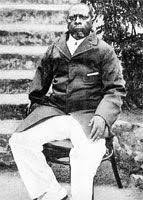
- It reached its zenith under King Kabalega (r. 1852-1869 and 1870-1898), known for his resistance against British colonization.
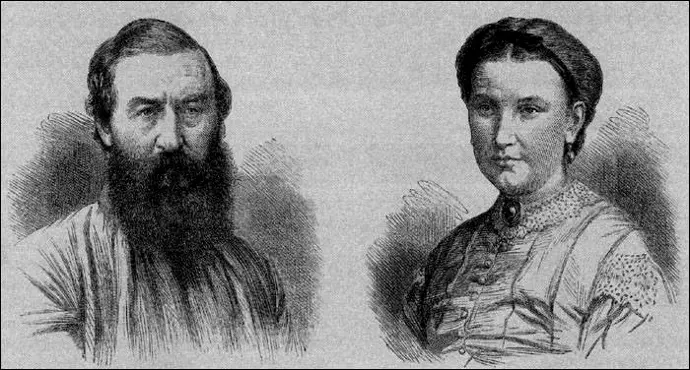
Did you know: Samuel Baker was in Vidin (present-day Bulgaria) when he encountered Florence. At that time, Florence, whose original name is lost to history but who may have been Hungarian or Romanian, was a young woman about to be sold in a slave auction. Samuel Baker was immediately struck by her beauty and intelligence, and he decided to intervene. He purchased her freedom and married her!
Speke, Grant, and Baker Expeditions:
-
In the mid-19th century, explorers like John Hanning Speke, James Augustus Grant, and Samuel Baker explored the region, leading to the so so called discovery of Lake Victoria and the source of the Nile River.
- Baker and his wife became the first Europeans to see Lake Albert and "a substantial waterfall on the Victoria Nile", which Baker named Murchison Falls after the then-president of the Royal Geographical Society, Sir Roderick Murchison.
It has been said that Kabalega wanted Florence Baker as his wife!
Establishment of Masindi Hotel:
- Masindi Hotel was established in 1923 by the East African Railways and Harbours (EAR&H) as a stopover for travelers along the railway line.
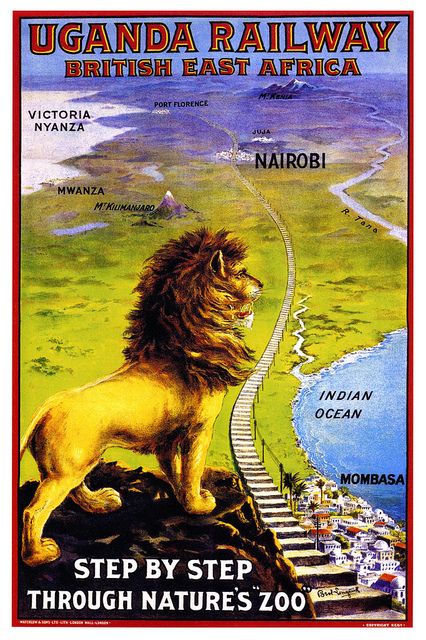
- The hotel was strategically located to serve as a rest point for passengers and crew traveling on the Uganda Railway, which was part of the larger East African railway network.
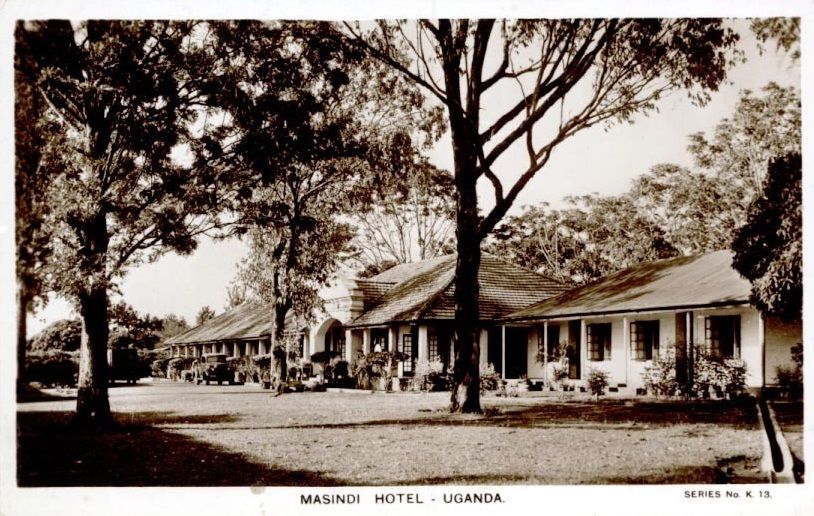
Masindi Hotel as a Railway Stopover:
- Masindi Hotel became a popular stopover for passengers and crew traveling on the Uganda Railway, offering comfortable accommodation and amenities in a scenic setting.
- The hotel's association with the railway added to its historical significance, reflecting the era of colonial expansion and the development of transportation infrastructure in East Africa.
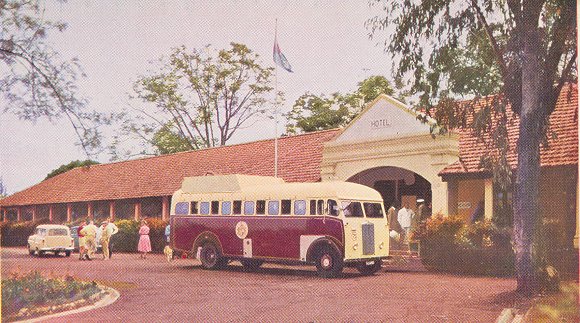
Uganda Railways:
-
The Uganda Railway was completed in 1926, connecting the port of Mombasa in Kenya to Kampala, the capital of Uganda.
- The railway was a major engineering feat, overcoming challenging terrain and wildlife, including the construction of the famous Lunatic Express section.
Role of EAR&H in Development:
- The East African Railways and Harbours (EAR&H) played a crucial role in the development of East Africa, facilitating trade, transportation, and communication across the region.
- The railway system connected landlocked countries like Uganda, Rwanda, and Burundi to the coast, opening up new markets and opportunities for economic growth.
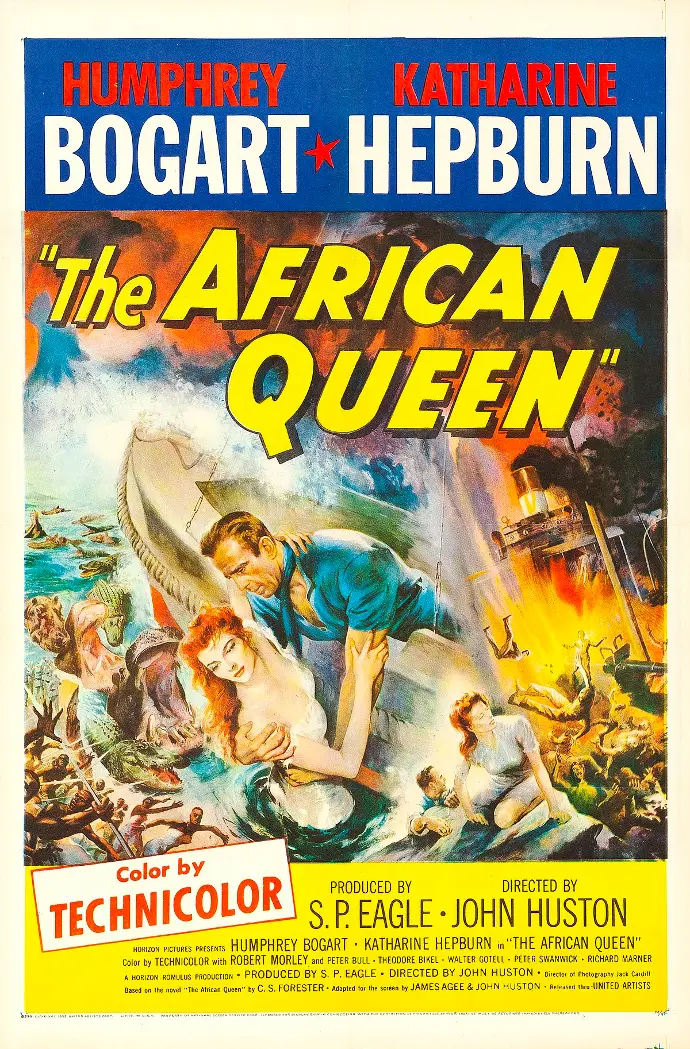
The African Queen:
- Ernest Katharine Hepburn and Humphrey Bogart stayed at Masindi Hotel while they were in Uganda filming "The African Queen."
- The movie was shot in 1951, and their time at the hotel was part of the production's challenging schedule, which involved difficult and adventurous conditions in the African wilderness.
- Their stay at Masindi Hotel provided them a brief respite from the demanding filming process.
- The movie significantly boosted safari tourism in Africa, primarily due to its vivid depiction of the African landscape and adventure. Filmed in Uganda and the Congo it showcased the stunning natural beauty and exotic wildlife of the African wilderness, capturing the imaginations of audiences worldwide.
- The film's backdrop featured lush jungles, mighty rivers, and diverse wildlife, which painted an enticing picture of Africa as an adventurous and unexplored destination. This portrayal helped to romanticize and popularize the idea of the African safari among Western audiences, who were enthralled by the notion of exploring remote and wild places as depicted in the movie.
Safari Tourism:
-
The publicity surrounding the challenges faced by the cast and crew during filming The African Queen, including harsh conditions and logistical difficulties, added to the allure, emphasizing the adventurous spirit of African safaris. As a result, there was a noticeable increase in tourist interest in Africa, with many visitors eager to experience their own "African Queen" adventure. This interest helped to develop the safari tourism industry, leading to the establishment of more tour operators, improved infrastructure, and increased conservation efforts to preserve the unique environments shown in the film.
Did you know: During the 1950s you had to book your stay at Masindi Hotel 2 years in advance.
Ernest Hemingway:
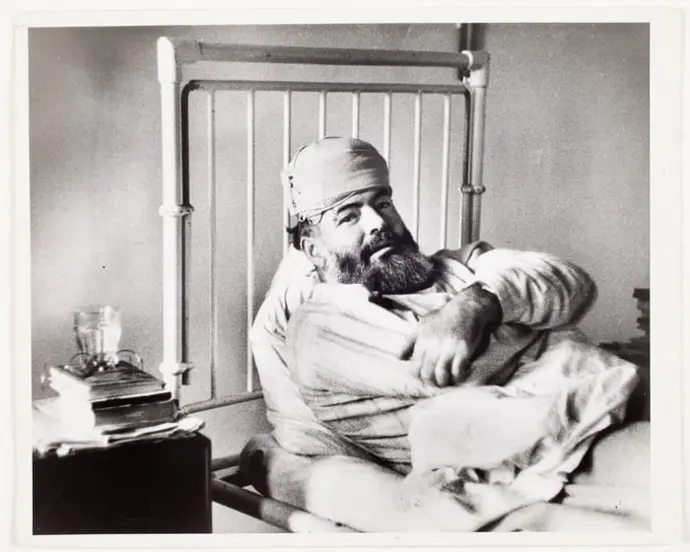
- Ernest Hemingway stayed at the Masindi Hotel in 1954. This visit was part of his African safari trip. Unfortunately, during his time in Uganda, Hemingway and his wife were involved in two plane crashes which significantly marred their experience.
- The first crash occurred shortly after taking off from Entebbe, and the second occurred during a rescue mission.
- These incidents, along with his time at Masindi Hotel, became part of the lore surrounding Hemingway's adventurous and tumultuous life.
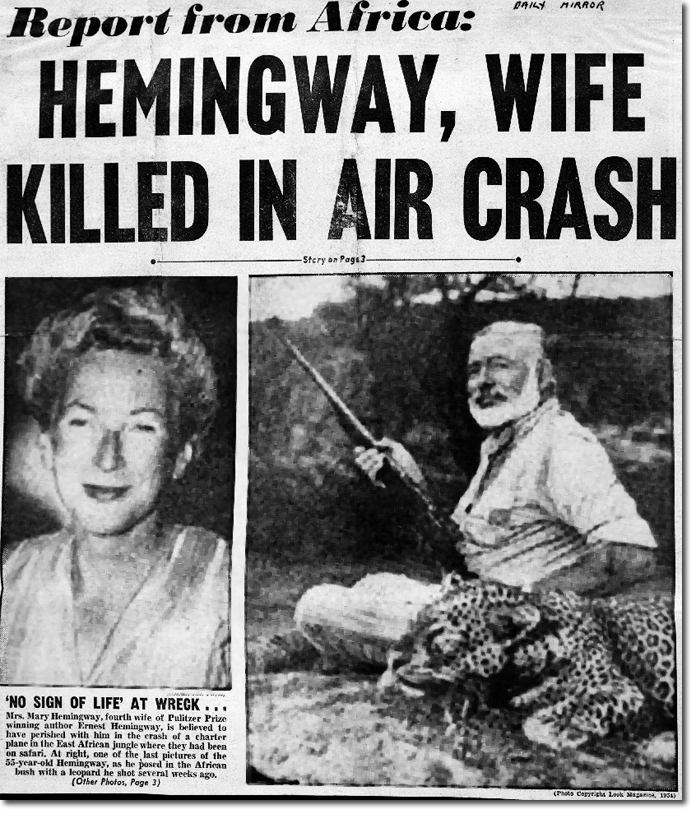
Did you know: Ernest Hemingway had an unusual ritual of celebrating his obituary. This tradition started after he survived multiple plane crashes in Murchison Falls National Park, which led to premature reports of his death. When Hemingway returned to Havana, Cuba, after these incidents, he found that newspapers had published his obituaries. He took to reading them aloud at his favorite bar, the Floridita, enjoying the reactions and the attention it brought. Hemingway even collected clippings of these obituaries, reportedly keeping them as mementos of the bizarre experience. This ritual highlighted his larger-than-life personality and his unique sense of humor about his own mortality.
Post-Independence Era:
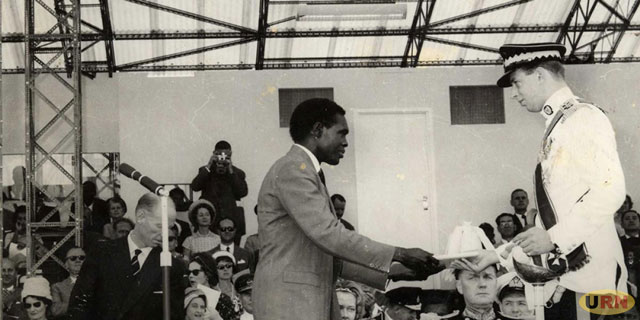
- After independence, Masindi Hotel continued to serve as a landmark along the Uganda Railway route, catering to both domestic and international travelers.
- The hotel's historical connections to the railway era were preserved, with guests able to experience a glimpse of East Africa's colonial past.
Uganda Hotels:
- At Independence in 1962, it was one of about a dozen hotels that constituted Uganda Hotels Limited, a government parastatal during the Obote I regime.
Did you know: During the 1960's you had to book your stay at Masindi Hotel 2 years in advance.
Continued Significance:
- The hotel was privatised in 2000 and the new owner embarked on a continuous process of restoration.
- Today, Masindi Hotel stands as a symbol of Uganda's rich history and cultural heritage, with its association with the Bunyoro Kitara Empire, the explorations of Speke, Grant, and Baker, the Uganda Railway, and the post-independence era.
- The hotel remains a popular destination for tourists and history enthusiasts, offering a blend of historical charm and modern comfort.
CCFU Award
- The first edition of the National Heritage Awards was held in 2013 , the Bhegani family was awarded for the restoration of the historic Masindi Hotel.
- The UN cultural agency UNESCO classifies tangible heritage as buildings and historic places, monuments, and artifacts which are considered worthy of preservation for the future. They include objects significant to the archaeology, architecture, science or technology of a specific culture.
- Intangible heritage on the other hand includes but is not limited to traditional festivals, oral traditions, oral epics, customs, ways of life and traditional crafts. It has become one of the priorities of UNESCO in the cultural domain.
Centennial Award
- In 2023 Masindi Hotel reached the 100 year milestone and the owners were awarded by the Ministry of Tourism Wildlife and Antiquities and Uganda Tourism Board during World Tourism Day celebrations that were held in Hoima City.
- The hotel celebrated 100 years with staff and friends and family.
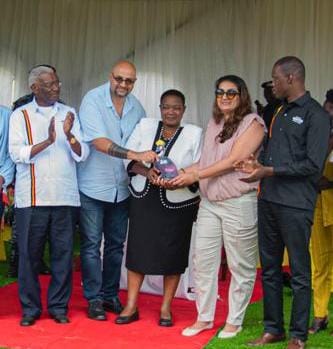
From Right to Left: Hon. Minister Tom Butime MTWA, Rahim Mohamed, Right Hon. Prime Minister, Nahida Bhegani, Hon. Minister of State for MTWA, Martin Bahinduka.